Last year, I traveled with Mauricio and Andrea to the communities located in the flood-prone area of the Mamoré River, in the municipality of Loreto. The purpose of the trip was to understand firsthand the social and economic context of the families living there, in order to strengthen the focus of the work MINUVAF has been carrying out in the area.
But beyond that, we wanted to identify physical needs that could be addressed through bridges of love: practical actions that show the love of Christ in tangible ways.
A few years ago, I had worked on the strategic environmental assessment in this region. That gave me some background information about the problems, challenges, and possible actions that could be developed in these communities. However, being there, walking among the families and seeing their needs up close was something entirely different.

The trip lasted four days. During that time, we visited four specific communities: Loreto, Camiaco, El Masi, and Santa Rosa del Paraíso. We reached the first three by truck, and in each community we held a small evangelistic service, mainly with children and young people.
On the third day, we focused on the community of Santa Rosa del Paraíso. During the floods earlier that year, this community had lost a large part of its land due to the rising waters of the Mamoré River. By the time of our visit, the families were in the process of relocating to the opposite bank of the river, preparing small plots of land for crops and for the future construction of their homes.
As I faced this reality, I found myself asking a question I believe many of us would ask: What is the Lord’s plan for these communities?
The most direct answer might be: that they would come to know the Lord Jesus Christ as their Savior. And, of course, that is our greatest hope. However, when I think about the impact of the gospel on a person’s life, I also think about John 10:10 and the abundant life Jesus promised.
“I have come that they may have life, and have it to the full.”
John 10:10b
Then another question arises: What does that abundant life look like in these communities?
Having served as a pastor in an urban congregation, and having participated in ministries that work in that same context, it is easier for me to imagine what abundant life could look like in the city: access to health care, stronger families, economic development, educational opportunities, professional growth, or the pursuit of God-given purpose.
But when I find myself in communities where people must travel an hour or more by barge to access basic health services — and where the cost of that trip can be very high — and when I see how limited the opportunities for work, food, and development are, I am truly left without words.

So how do we find the answer?
The answer begins in a simple but profound way: by being present with the people of the community.
At the beginning of 2024, as we were talking about new ideas and projects, Mauricio shared with me the concept of people of peace in these types of communities. These are people who, through an ongoing relationship with a believer, develop a genuine interest and commitment to the Lord, and begin to intentionally present and live out Christ in the midst of their own community.
When we asked how to identify them, the answer was clear: through ongoing visits, close relationships, and a sustained walk with the families. Only then is it possible to present the gracious gospel of Jesus and, together with the community, identify the ways in which abundant life can become visible.
But another question also came up: Would the people in these communities be open to receiving the gospel?
In some cases, the initial answer might be no. Many of these communities have a strong Catholic or cultural tradition that may create some distance from evangelical Christianity. In fact, during the services we held on the trip, most of those who participated were children and young people.
So, after reviewing the information Mauricio and MINUVAF had available, we identified a bridge of love: a practical tool that would allow us to show the gospel of the Lord in a tangible way and open doors for ongoing conversations with families.
That is how Drop of Life was born.
According to the Report on Population Vulnerability to Disaster Risk in Bolivia (2015), faces a high flood threat and high population vulnerability, affecting productive activities and access to health care for more than 50% of its population. In addition, according to 2012 Census data cited by INE (2015), around 80% of the population of Loreto lives in poverty.
Drop of Life: Trinidad y Loreto
Drop of Life is a project that seeks to improve the quality of life of families living in communities along the banks of the Mamoré River, in the municipality of Loreto, by integrating access to purified water with long-term support, evangelism, and community development.
Sounds good, right?

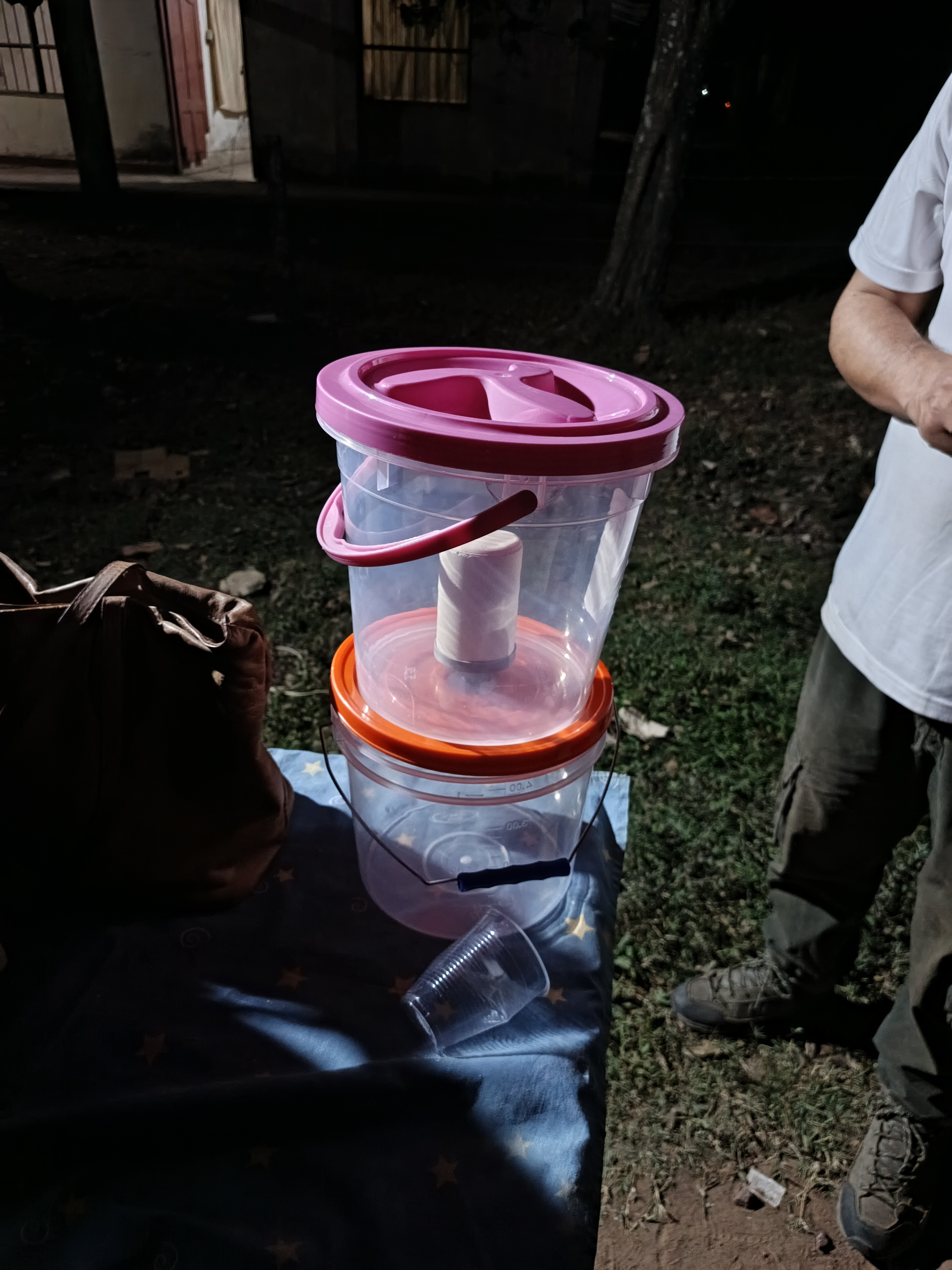
Imagine taking a simple water filter, giving it to a family, explaining how to use it, and then sharing the gospel by showing how, just as the filter can clean the water, the Lord can cleanse and transform our lives.
Then, weeks later, visiting that same family again to check the condition of the filter, spend time with them, listen to how they are doing, share the gospel again, and continue building a relationship. Beyond that, each visit allows us to gather valuable information about the real needs of the family and the ways in which the work of the Lord Jesus Christ can become visible in their context.
Isn’t that wonderful?
Drop of Life is a unique opportunity, not only to share the gospel, but also to discover more deeply the heart of the Lord for each family and each community.
And the best part is that this bridge of love is very concrete: each filter costs around $35, and an outreach trip to 10 families costs approximately $500.
Can you imagine being part of this effort?
We believe that knowing the Lord’s will for a community is not the result of a single visit, but of an intentional, patient, and close walk with the families. That is why, in future updates, we will share more about what this journey with them looks like.
Do You Want to Get Involved?
If you would like to learn more about how to be part of the upcoming activities, write to us at:
bolivia@saltshaker-ministries.org
You can also support the project by making a donation through the button below.


Leave a Reply